Future Sound


Who among us hasn’t dreamed of travelling through time? Who hasn’t contemplated the idea of going back in time to save lives, alter history, or gain financially? Who hasn’t wanted to seek out ourselves from an earlier stage in life to advise, instruct, or slap the living crap out of ourselves as a means of changing who we are and what we have today? Who among us hasn’t thought “if I could only go back in time…”? It is our nature. It is who we are. It is a universal desire despite being a physical impossibility, yet we still wonder. We still hope. We still yearn for the technology to alter some part of existence in ways that would mildly or drastically alter our everyday ways of life.

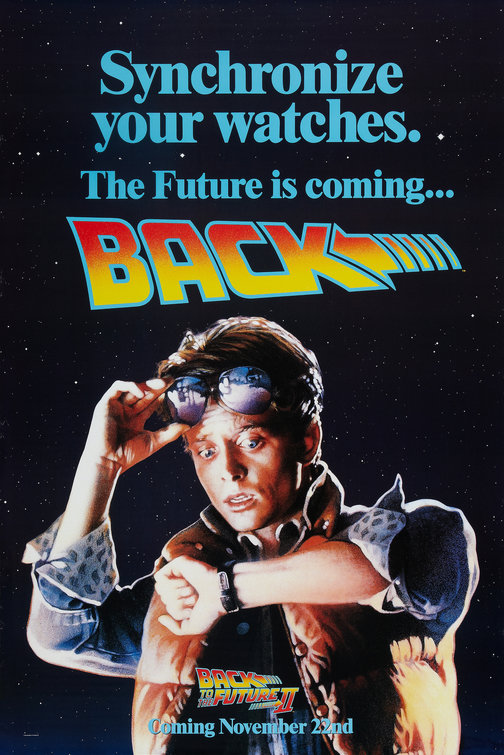
This is why Marty McFly is now and forever will be a cultural icon. Marty McFly experienced what each of us dream of. If not prior to, then at the very least, immediately following “Back to the Future,” Everyone wanted to travel to the past, everyone wanted to visit the future, and, quite frankly, everyone wanted a hoverboard. Marty McFly had it all, and we wanted it. We wanted it badly. Fortunately, “Back to the Future” is fiction. Doc never invented a time machine, Marty never travelled to 1955, 2015, or 1885, and the Delorian didn’t become a symbol of scientific advancement (depending on who you ask). We should all thank our lucky stars that “Back to the Future” is fiction. We should all be grateful that no such time travelling device exists. We should all breathe a sigh of relief that Marty McFly never existed because otherwise he would have ruined life as we know it, or at least a large part of it: if “Back to the Future” had been a true story, Martin McFly would have ruined rock and roll music for all time to come.

Rock and roll as we know it today would cease to exist. Certainly a variant form of rock music would have taken its place, but everything we currently know and love about rock music would not only stop existing, it never would have existed in the first place and therefore never evolved into what we now know as modern rock and roll music. We would have no concept of that which we love about it because it never would have happened. Some people fear heights, some people fear public speaking, some people fear death. I fear Marty McFly.

This, of course, is assuming that Chuck Berry is and always has been a musician with high integrity.

If you happened to be one of the three people between the ages of 5 and 105 who has not seen “Back to the Future,” or if your mind has been fried due to years of substance abuse or exposure to American politics, here is a little refresher course: At the conclusion of the primary storyline in “Back to the Future” Marvin of Marvin Berry and the Starlighters cuts his hand trying to free Marty McFly from a locked car trunk. Marvin, who is the lead guitar player and singer for the Starlighters insists that the dance has drawn to a conclusion due to his inability to play guitar with his cut hand; a detail that proves Marvin is not and never will be Pete Townshend or Jimi Hendrix. Marty begs Marvin to reconsider so that his future parents can solidify their eternal love through the magic of 1950’s Doo Wop. As a compromise, Marty, a 1980’s guitar virtuoso, agrees to fill in for Marvin for the purposes of ensuring his own future existence. So far so good.

As Marty is about to leave for his destined journey back to 1985, Marvin, the inevitable oracle says “let’s play something that really cooks.” Enter the end of rock and roll as we know it. At this point, Marty, not known for turning down an opportunity to quietly walk away from a challenge steps up to the microphone and introduces “an oldie where I come from” before launching into a blistering version of Chuck Berry’s legendary “Johnny B Goode.” Hubris never win in the end. See any piece of Ancient Greek literature for examples.

Robert Zemeckis and Steven Spielberg are a couple of jokers. While writing, developing, and producing the film, they had some fun throwing in a few timing gags. In this case timing is in reference to the cultural boundaries one would encounter by traveling to the past (different slang, lack of knowledge of future historical persons or events, etc). One of their jokes occurred during Marty’s rendition of “Johnny B Goode” in which Marvin makes a phone call to his cousin who happens to be, you guessed it, Chuck Berry; original author of “Johnny B Goode.” Marvin is seen talking into the phone saying “You know that new sound you’ve been looking for? Well listen to this…” and holds the receiver in the direction of the stage and Marty’s innovative (or innovative for 1955) guitar playing, indicating that Marty’s homage to the Chuck Berry classic is actually that which inspires Chuck Berry to author the song in the first place. Very funny, you have just ruined us forever. The problem with this is that Mr. Zemeckis and Mr. Spielberg are guilty of not taking their own advice.

Anyone who knows anything about the birth of rock and roll will tell you the same thing; Chuck Berry was one of the biggest pioneers and, by extension, most influential musicians in the history of rock and roll. Berry exploded onto the music scene in 1955 with a completely unique sound that had never been heard before. Prior to Chuck Berry, the roots of early rock and roll were set in various combinations of blues, R+B, gospel, country, and the big band jazz era as founded by artists like Elvis, Ray Charles, and Bo Diddley. But as Eric Burdon of the Animals said “I always felt that Chuck Berry was the poet laureate of America” or as Carl Perkins once said “Chuck Berry was an act you didn’t want to have to follow.” Carl Gardner of the Coasters goes so far as to call Chuck Berry and Little Richard the kings of Rock and Roll. There is no doubt that Chuck Berry’s sound would go on to either directly or indirectly influence every guitar player that would follow, but none of that could have happened had he listened to Marty McFly play his song. Again, assuming Berry was a musician with a high level of musical and innovative integrity.

Artistic pioneering does not happen by accident. Artistic pioneering does not happen by coincidence. Artistic pioneering only occurs through either an innovative mix of current or past styles, or through the full rejection of current popularity. The 1960’s psychedelic movement occurred through innovation using blues and jazz with experimental electronic influences, the punk movement occurred through a rejection of the Woodstock era, the 1970’s arena and glam rock was born out of pushing live production value to an extreme, grunge was born out of rejection hair metal, all styles evolve through pushing boundaries of musical styling or full rejection. Chuck Berry’s innovation was no different.

When Marvin calls and says “you know that new sound you’ve been looking for” he actually single-handedly eliminated the influence Berry had on the world of music. Had Berry heard Marty playing in Berry’s signature style, it would have become clear to him that that style already existed, and therefore was not new or innovative, and therefore was not a pioneering effort. If we assume that Chuck Berry is a musician of integrity, we can assume that he had no interest in attempting to re-create a pre-existing style he heard elsewhere. If we assume Berry is only interested in money and fame and not about musical innovation, we can assume that he would have heard the efforts of this no-name band playing a high school dance and considered the style a failure from the start and not worth the effort. After all, who in their right mind would want to copy a band whose ultimate achievement was playing the Hill Valley High School “Enchantment Under the Sea Dance?”

Case and point, you will notice that following Marvin holding the phone up to the stage, Marty’s guitar playing turns from a distinct Chuck Berry sound to what can only be described as electronic noise, or punk, which is really the same thing. Most would argue that the transition is the result of Marty simply becoming carried away with his live performance antics, but perhaps Zemeckis and Spielberg were acutely aware of the detrimental implications of this particular time disruption. Perhaps they recognize that upon Berry’s hearing and rejection of what would ironically go on to become his own style, the influence that travelled from 1955 through the generations to McFly in 1985 would instantaneously become irrelevant and vanish. In other words, as soon as Berry hears McFly’s “Johnny B Goode,” the song “Johnny B Goode” and musical style of Chuck Berry as a whole would no longer exist (as Berry would have no interest in copying it, as opposed to writing it originally), and instantly reduce McFly to a fumbling maniac with a guitar who has no knowledge of “Johnny B Goode.” By playing the yet-to-be-written “Johnny B Goode” to and unimpressed Chuck Berry, Marvin caused the song to be instantaneously eliminated from existence altogether. Eliminating Berry in the past would render his music non-existent in the present and future. This is my nightmare.

It is hard to say how extensive Chuck Berry’s influence in music actually is. Ray Manzarek of the Doors has said that every guitar player was in some way influenced by Chuck Berry which is certainly an indication that his sound played a large part in shaping the future of rock and roll. Obviously when playing a Green Day, Kiss, or Metallica record, one doesn’t think immediately about how closely it sounds like Berry, but influence is everything, especially when playing the six degrees of influential separation game. Musical influence is a lot like the food chain. Any biologist, chemist, or garbage collector with some common sense will tell you that if humans no longer existed, animal and plant life would flourish beyond cognitive imagination, but if microscopic plankton no longer existed, all life on this planet would cease almost immediately. Music is the same way: Take away current, high grossing musicians, and the history of music doesn’t skip a beat (no pun intended), but take away the early founders of rock music, and everything we know and love about all media as a whole changes in ways we can’t possibly fathom. Life itself changes in ways we can’t possibly fathom.

Dick Clark’s most famous quote is “Music is the soundtrack of your life.” Besides being possibly the least profound and most obvious expression anyone has ever said about music, Clark managed to actually strike a chord people up with that quote. He is right. Music is not only the soundtrack, but in a lot of ways, it is the cornerstone of a lot of our memories and experiences. Music changes people. Music leads people in different directions. Music makes people think about who they are and what they want. What would have happened if the Beatles (whose covers of “Roll Over Beethoven” and “Johnny B Goode” indicate that they too were influenced by Chuck Berry) had never made it big and played Ed Sullivan? What would have happened to the Rolling Stones who never would have had the Beatles to chase? What would have happened to countless other bands who count the Beatles or the Stones as their number one influence? What if Bob Dylan hadn’t plugged in his electric guitar at Newport in 1965 and played “Maggie’s Farm” to a sea of booing folkies? What would have happened if there were no Woodstock? No Monterey Pop Festival? No Isle of Wight? No Altamont? No Bonnaroo? What would have happened (or not happened) in countless cars at “make-out points” across the county without “Stand By Me” “When a Man Loves a Woman” or “In-a-Gadda-Da-Vida?” Maybe nothing. Maybe everything.

It is not enough to say “we would have found our way eventually” or “if Chuck Berry didn’t do it, someone would have.” That is tempting fate, which is something we certainly can’t rely on. Don’t forget, if Marty hadn’t gotten his parents back together in 1955, he would have ceased to exist, too. Relying on fate is a lot like relying on the law of large numbers: sure, maybe it would have happened eventually, but there is no telling how it would have transpired, and there certainly be no way of knowing when or by whom.

The one consolation is that had Berry not gone on to be one of the most influential musicians of all time, we would have no concept of what music would be, and more importanly, we would have no concept of what we are missing. Maybe it would have been worse, but maybe it would be vastly superior. Either way we would have no concept of it what-so-ever. Think about it this way. It is entirely possible if not probable that somewhere in history’s past, someone who could have drastically influence the future of American culture could have been stopped from doing so, but we don’t know what we would have been missing. In other words; a Chuck Berry type person with equal innovative ability very well could have existed without actually influencing anyone or anything, but we don’t feel we are missing out on anything.

There is simply no telling what implications would have happened through the course of time had Chuck Berry not pioneered his corner of the musical universe, but, unless you believe in fate (which clearly the creators of “Back to the Future” don’t), all our lives would be drastically different in some way, maybe for the better, and maybe not, and luckily, we will never know. The moral of the story is simple: If you find yourself back in 1955 and someone asks you to play a song at a high school dance, pick one from a band that doesn’t matter like Nickelback or someone.

It's Not Science, It's Love


I know exactly one universal fact that will never change: there is no logical reason for anything that happens. Broad? Yes. Concise? Absolutely. Inaccurate? Most likely, but in my experience, logic has no place in reason. Let’s take a step back: When an object is dropped, it will fall to the ground. When water becomes very cold, it will freeze. When Yo-Yo Ma picks up a cello, he will rock in a way you never thought classical music could rock. These events do not require logic.

But when trying to rationalize why LaBron James signed with the Miami Heat, or why Lady Gaga is so popular in the gay community, or why some people think Dane Cook is funny, there is simply no logical rationale. Realizing of course this is not a negative trait at all, it is simply a null set which transcends explanation. If you asked 100 gay men why they like Lady Gaga you would receive a different answer almost 100% of the time including responses along the lines of “I don’t like Lady Gaga” at least 20-30% of the time if not more. Why is this? Because there is no concrete universal answer. If you asked 100 sports analysts about LaBron’s Miami move each will give you a separate and unique reaction, but that is because there is no definitive, all encompassing explanation. This is a fact of life that has consistently proven true time and time again. There is no universal logic, so logic is null, and therefore nothing matters.

So I joined a dating website. Why? For exactly no reason what-so-ever. Literally. I am not lonely. I work in theatre and meet very attractive and usually single women on a regular basis. I have no interest in meeting any of the women I find on a dating website. I have been on the site exactly 3 times and have never contacted nor been contacted by any members. And I sure didn't pay a subscription fee. I joined a dating site for no other reason than to join a dating site; to see what the future, or at the very least, the present, of internet dating was about.

The internet age and I grew up together. I remember getting my first dial-up modem for our home computer and signing up for a subscription to America Online when I was about 10. I vividly recall the rise of the “chat room predator” paranoia among America’s parents. Every week there seemed to be new stories on the news about a 50+ man posing as someone else and luring 12 year old girls away from home. This was a time when seeing the typed phrase “I want 2 meet you” was the single most horrifying thing a parent could ever see on a computer screen. The idea that anyone would pay money to get together with other people they met on the internet was absolutely unheard of.

But as a much wiser man than I once said “The times they are a-changing.” Culture and experience evolved, and online dating became one of the biggest and most prominent online industries of the last 20 years even edging out internet pornography. Yes, Americans spend more money on virtual dating (an average of $239 per person per year) than they do on porn. Take that Dateline NBC.
In this country an estimated 40 million people are currently involved in some sort of cyber dating service. With 20 million registered members, eHarmony.com tops the list of sites. Almost 53% of online daters (who will henceforth be referred to as eDaters) are adult men, and the average age is 48.
Culture evolves just as nature evolves. What was once unknown and forbidden territory now becomes commonplace. We, as people, do not run scared from the new and unknown, we embrace it, we learn from it, we profit from it, and then we exploit it. With cultural acceptance comes cultural exploitation. Like any industry who’s success depends entirely on a nameless faceless consumer population, and especially any industry who’s end result is seeing someone else naked: we lie. We lie a lot.

It is easy to find data about the most common lies people tell about themselves on dating websites. A quick Google search with wield dozens of sites about the biggest lies told and how to spot a lie. It is as though the dishonesty of eDating is equally as accepted as eDating itself. The lies are statistically measured, and the results are to be expected: Men lie most about their age, height, and income, women lie most about their weight, physical stature, and age. It seems obvious why people would lie about themselves: the more attractive (physically or otherwise) I make myself the more messages of interest I will receive from the opposite sex. However, logic has no place in reason.

By a resounding majority, people of both sexes will say that honesty or trust is the most important part of a successful relationship. The second most important thing is communication. So let’s review: of the roughly 70% of people surveyed by Topdatingtips.com who said they would try eDating, where lying and dishonesty is an accepted practice and connections are made through individuals silently browsing two-dimensional profiles alone before sending an e-mail to a person of interest, most would count honesty and strong communication as the two most important aspects they look for when establishing a relationship. Logic has no place in reason.

Now, skipping past the obvious conclusion that any and all lies about one’s physicak appearance will be immediately debunked upon the initial meeting of the two eDaters, the stats on eRelationship successes are fascinating. It is like dating on crystal meth. eHarmony claims that connections have led to as many as 236 members being married each day (though little evidence supports this claim, looks like members aren’t the only ones lying about themselves). A recently survey found that 30% of female eDaters has slept with a man they met online on the first meeting; 80% of whom did not use any form of protection. If that sounds like a quick turn-around, how about the fact that the average eCourtship leading to marriage is approximately 18.5 months compared to 42 months for those of us who date the old-fashioned way? This all from an industry built on that which was everyone’s biggest fear 20 years ago.

There is no question that the internet has changed the way mankind communicates more than any other tool since the invention of the telephone. My generation saw the rise of AIM, e-mail, Napster, Facebook, Myspace, Facebook again, Craigslist, E-bay, YouTube, Pandora, Chatroulette, and the list goes on and on. The internet has changed the way we talk to friends and family, the way we buy and sell goods, the way we watch television and movies, the way we listen to and acquire music. why shouldn’t dating be next?

The internet has not only changed how we do things, but it changed us as well. Shy kids who were too terrified to call a member of the opposite sex (or same sex as it were) were able to freely eChat well into the night via AIM without even thinking twice. They actually became more social by sitting silently alone in a dark room at a computer. We became a more connected society, but we became a more passive society as well. Calling someone on the phone became unnecessary, even too aggressive compared to IMing someone. Why confront someone in person when you can simply send them an e-mail? Why go to the store when you can buy anything you need from Amazon.com and have it shipped right to you? And now with eDating, the biggest obstacle has been conquered. Too timid to go out and meet people? Too shy to ask someone out on a date? Just sign-up for eHarmony and your problems are solved, just let eHarmony do the heavy lifting for you. They have set up a way to passively ask out and passively accept or reject anyone you want. We are slowly moving towards a society where no one has to vocally say anything to anyone at all. The internet has managed to simultaneously bring the world together and isolate everyone who embraces it. As much as some would still caution against it, eDating is not simply a part of modern society, it IS modern society, and for no other reason than because it is there. Logic has no place in reason.

Certainly, an inescapable stigma still lingers at the idea of “meeting someone online,” and the dangers of being scammed through the written word have not, in anyway decreased (many would argue the opposite to be true), but we are different now. We are better suited to recognize how to spot potential danger online. I don’t know too many people these days who click on a pop-up ad to “win a FREE iPod” or “meet sexy singles in your area” where as 10 years ago we may have been more susceptible rather than suspect.

Recently, I had a conversation with a cousin of mine who is roughly 15 years older than I and who has 2 young children. We began discussing guarding against internet predators and how she fears that she has absolutely no way to protect her children from being lured in by someone who wants to do the unthinkable to them. This is, no doubt, still a universal fear among parents, especially parents who were not born into the internet generation the way her kids were. My immediate thinking was this: rather than banning your children from going into chat rooms and conversing with strangers, try encouraging them to. Lead that charge in protecting your loved ones by embracing culture rather than retreating from it and fearing it.

When I was a kid in the 1980’s, the golden rule was simple: don’t talk to strangers. Simple, straightforward, easy to remember. If you are a stranger I am not talking to you, period, end of story. But this reasoning is flawed. Reality is much more complex than can be summed up into a four word statement. Yes, for the most part, it is a good defense for a kid to stay away from adults they don’t know, but not always. What about strangers in uniform? What about strangers of authority? What about strangers who are there to help you rather than harm you? Children need to learn that there is a big difference between a stranger with a trench coat and a stranger with a badge. There is a big difference between a rusted out 1987 Oldsmobile and a police squad car. But mostly, children need to learn that if they are in danger, they know who they can tell, and parents and families aren’t always around when something happens, and in fact usually parents and families aren’t around when something happens. There are good strangers and there are bad strangers, and the only way a child can really learn how to differentiate between the two is by learning the tell signs.

An internet chat room is like a game of poker. You can’t see the hand anyone else is holding, but if you play the game long enough you learn that there are always telling signs to know when someone is bluffing, and by learning these signs, you have a better chance at winning. Children can easily learn what signs to look out for. They can become acutely aware of what they should avoid in order to stay out of trouble. Just as I learned how to stay clear of the wrong strangers in the outside world, children can and should learn how to steer clear of danger in the cyber world without being technologically left behind. Give them the proper tools and kids can accomplish just about anything. “Teach your children well.”

Screws fall out all of the time, the world is an imperfect place, and despite statistical analysis and public polling, no universal rationale exists in the world because outliers have always and will always exist. There is a solid guarantee that 90-99% of everyone you will find on a dating website is there for the same reason you are. They are looking for love in the final refuge of the lonely, but no place on Earth or in cyberspace is 100% safe no matter how hard you try. This is a fact that everyone already knows but no one wants to accept. We want people we meet online to be honest. We want that perfect man or woman with everything we have always desired to be there waiting to be discovered by us. Of course if they are there waiting for us, we need to look our best, so we tell little fibs. We lie about how tall we are, how much we weigh, how much we drink or smoke, our religious preferences, how much money we make because we know that when we find Mr. or Ms. Right, the lies won’t matter; they will love us regardless. So there we are, sitting alone at a computer hoping the honest, trustworthy true life soulmates will fall passioantely and helplessly in love with the dishonest image of ourselves… Logic has no place in reason.

Everything Changes, Except That Nothing Does


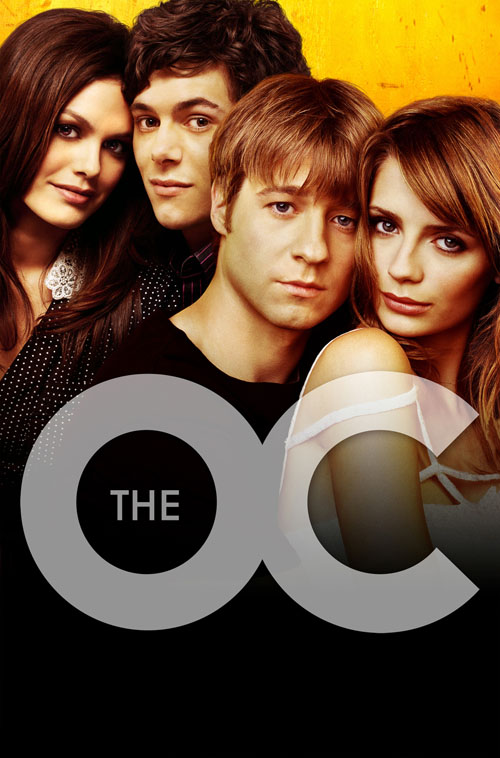
I love The OC. This is a fact that surprises most people who know me, myself included. As much as I try to resist, as much as I try to ignore, and as much as I try to dissuade, one haunting and beautiful fact remains: I love The OC.

What is not to love? A lonely yet naturally bright kid from a bad neighborhood finds himself in trouble for a crime he did not really commit. His good-natured, mildly self-righteous and quick witted lawyer recognizes the boy's potential, and takes him into his loving, yet oddly detached home in Newport Beach, California where he becomes the missing ingredient in the lives of the lawyer himself, his overly stressed and cynical wife, and his quirky and socially isolated son. The young man finds himself in the center of a whirlwind of Orange County's most socially elite yet emotionally, morally, and ethically broken residents and manages to, though seemingly out of his element, act as the missing and much needed ingredient in the lives of those around him. He finds love, friendship, family, direction, and passion in a world that was not meant for him.

If it weren't for the overt over-the-top use of violence, sex, drugs, scandals, and generally seedy underpinnings of a seemingly perfect world that makes The OC look like Beverly Hills 90210 on steroids, the show could follow any showing of the Charlie Brown Christmas Special every December.

Anyone unfamiliar with the show can get everything they need to know from this iconic scene.

The OC represents everything a 21st century American teen drama about an affluent society should represent all capped off with the rather clichéd and obvious theorem that a cultural outsider is never the cause of problems within a society, but rather the outsider uncovers the all too prevalent problems that the given society has become desensitized to over time. Even the most casual of observers cannot escape nor ignore this incredibly over-used and unimaginably banal of statements. But the rather primitive of cultural critiques of the depraved was not what makes me love The OC. I love The OC because every time I watch the show I think of 2 things 1) “Buffalo Bill” Cody and 2) Forrest Gump.

There are moments in American history that can profoundly affect and be affected by unknowing individuals who simply show up. One of these instances was in the late 19th century into the early 20th century, right around the time that William "Buffalo Bill" Cody made a name for himself. Famous for the traveling live spectacle known as "Buffalo Bill’s Wild West," William Cody had a much more fruitful and historically profound life in the American "old west" than most casual observers will recognize. In reality, Cody, according to various accounts, took part in just about every iconic activity commonly thought of when thinking of the turn of the century frontier. Cody was born into a family who actively protested slavery in the United States. He served as the Chief of Scouts for the Third infantry in the American Civil War where he was awarded the Congressional Medal of Honor. He was a fur trapper and buffalo hunter. He was contracted by the Kansas Pacific Railroad company to serve buffalo meat he hunted to its workers during construction of the railroad. He delivered mail for the Pony Express for a time, dug for gold in Colorado, drove a stagecoach, and managed a hotel all before founding the touring live spectacle known as "Buffalo Bill's Wild West" that essentially created the American depiction of cowboys versus Indians. Despite profiting from the overly stylized and stereotypical depiction of American Indians, Cody was a staunch supporter of the turn of the century civil rights moment for women, Indians, and African Americans. William Cody is, by all accounts, the iconic frontiersman of the late 19th century, and he achieved that status simply by existing at the right time and place.

Then there was Forrest Gump, the highly fictionalized dimwit that had first-hand experience in an extraordinary number of significant events that happened in the United States from the Mid-1950's till the late 1980's. It doesn't take a whole lot of historical education to know that a lot of profound and revolutionary events occurred in the latter half of the 20th century, and it doesn't take a whole lot of complex arithmetic to figure out when a person would need to be born to experience it all, but never-the-less, the idea that a single person can exist to experience it all captivated movie audiences and a number of critics and members of the motion picture academy in 1994. It had the added bonus of making America gasp in unison and ask “what the Hell did they do to Gary Sinise’s legs?”

Here a snapshot of Forrest Gump’s cultural and historical resume: 1) teaching a young Elvis Presley to dance 2) witnessing the racial integration of the University of Alabama from directly behind George Wallace’s racist ivory tower 3) playing football for "Bear" Bryant’s Crimson Tide 4) Fighting in Vietnam where he won a Congressional Medal of Honor 6) speaking along-side Abby Hoffman in Washington DC 7) Meeting Presidents John Kennedy, Lyndon Johnson, and Richard Nixon 8) Witnessing and reporting the Watergate break-in 9) almost single-handedly improving relations between the US and China through the sport of ping-pong 10) Meeting John Lennon while on the Dick Cavett Show 11) Founding the Bubba-Gump shrimp corporation 12)Purchasing stock in Apple Computers when it was a young unknown company 13) and coining the expression "shit happens." Not too shabby for a kid who's measured level of intelligence is below the average standards for the Alabama public school system.

Had Forrest Gump been real, he would have been to the American experience what the Ford Model T was to the automobile industry; he would have single-handedly shaped America for all future generations. He was everywhere, yet he was nowhere at the exact same time faded into the background of photos and videos of some of the nation’s most prolific personalities. The premise for the film was simple: in the second half of the 20th century, history was taking place every moment (except for the 1980's), and a single unknown person could exist to be a part of it all without ever realizing it. Not a particularly advanced premise, but it broke box office records and swept the Academy Awards, so Robert Zemeckis is probably not too broken up about it.

The bit that made Forrest Gump fascinating, aside from the clever and tasteful use of film technology, was that he was, for lack of a better word, an idiot. A major character trait, in fact the only prominent character trait, was that Forrest had a below average IQ and didn’t seemingly possess the ability for complex and rational thought the way “normal” people do, though I suppose an argument to the contrary could be made. Forrest essentially shaped history through total and complete idled existence. His lack of activism was in itself the cause of his level of historic exposure. He simply travelled as the winds of time carried him (as referenced by the opening sequence of a feather travelling in the breeze to land at his feet), and by extension we, the audience, could very well be unknowingly living that which will be viewed as historically and culturally significant for generations to come. Again, this is a simple, clichéd, and remarkably obvious premise, but one that seems to strike a chord with anyone looking for a 20th century period piece about a man with a good, honest, and noble heart.

Forrest Gump is, without question, a fictionalized William Cody half a century later.

Which brings us to Ryan Atwood and Newport Beach circa 2003. Unlike Forrest Gump, Ryan is described as a bright kid, but like Forrest, he is the perpetual outsider. Where Forrest was limited in intelligence, Ryan is limited by his socio-economic background, but his limitation is what makes him extraordinary; at least extraordinary in the respect that his presence has a profound effect on his surrounding community.

The OC’s depiction of Newport Beach 2003 is a microcosm of the United States mid 20th century existing as its own entity with its own budding and changing cultural boundaries being exercised and challenged by those within it. Most people, of course are blind to the realities of Newport until Ryan enters the scene. He is viewed as something of a parasite at first, tainting the community with his filthy “lower class” status until eventually (though not fully realized until the final season) he truly gains the respect and admiration of everyone he encounters.

Ryan is an enigma, but he is an enigma with a remarkable propensity for bearing witness to every significant event in Newport Beach over the course of 4 years. When Kirsten’s model home burned down, Ryan was there. When Marissa overdosed on painkillers, Ryan was the one who found her. When Jimmy lost millions of his investors’ money, Ryan broke up the fist fight. When Luke’s father was discovered having an illicit affair with another man, Ryan saw them kiss. When Oliver goes crazy and tries to kidnap Marissa, Ryan was the only one to suspect and the one to save the day, and this is all just the first season. Ryan is to Newport Beach what William Cody and Forrest Gump were to America in the late 19th century and the mid-late 20th century respectively. The OC is about an affluent community that has affluent problems, but those problems were not recognized prior to the arrival of Ryan Atwood who, for all intents and purposes, had no business being there to recognize them. By Ryan being Ryan, Newport became Newport.

Everything changes, except that nothing does. The railroads would have been built, the Pony Express would have functioned, the Civil War would have been fought and won by the Union, African-Americans, women, and American Indians would have gained the same Constitutional rights as white men, and cowboys would ride off into the sunset. But then, maybe they wouldn’t.

The Civil rights movement would have prospered. The University of Alabama Crimson Tide would roll on. Vietnam would have ended in controversy. John Lennon, John Kennedy, and Robert Kennedy would have been assassinated. Nixon would have resigned amid scandal. New York City in the late 1970’s would have been a seedy, disgusting, cultural cesspool. Shit would happen. But then, maybe they wouldn’t.

Jimmy Cooper would have stolen millions of dollars. Marrissa would have overdosed in Mexico. Seth would have chosen Anna over Summer. Kirsten would have gone to AA to get sober. Julie would have slept with Luke. Caleb would have died penniless despite his affluent image. But then, maybe they wouldn’t.

Like most people, I don’t know much about chaos theory, but I do not a lot about “Back To The Future,” and as such, I know that a single, seemingly insignificant act of normal everyday life by a normal everyday person can, will, and does have a dramatic effect of future events. I know that if Marty McFly hadn’t pushed his father out of the street in 1955, his life in 1985 would have been just as he had left it assuming he had done nothing else to disrupt the space time continuum, which is, of course, impossible. Instead, Marty, who was thrust into a time and place he didn’t understand, drastically altered the course of human events in a way no one could possibly comprehend through a single act of humanitarianism. By Marty being Marty, 1985 could no longer be 1985. But all can ultimately be fixed by Chuck Berry.

So the question remains, how much of an impact did William Cody have on the shaping of human history. Would life have existed as we know it had he not reportedly hunted more bison than anyone in his immediate social circle? How would the civil rights movement have been affected had Forrest Gump (or someone else) not picked up a dropped notebook and handed it back to Vivian Malone as she entered the University of Alabama for the first time? How would the Cohen family have survived in Newport Beach had Ryan and Trey not attempted to steal a car? Would Seth and Summer ever gotten together? Would Sandy ever have started teaching? Would Kirsten ever have learned to cook? One thing that is still certain: no matter what, George Wallace would still be a dick.

Never underestimate the magnitude of impact a single person can have on any given circumstance. And do not assume that those who impact society the most are individuals already prevalent within a given society. If history (and movies) has taught us anything it is that cultural outsiders stand to shake the foundation of future events as much, if not exponentially more, than insiders for the very reason we love Forrest Gump and The OC; it takes a certain kind of fresh outsight (as opposed to insight) in order to truly see the flawed nature of being, and it is within that recognition that the most profound of changes can and will occur. Bill, Forrest, and Ryan teach us that these truths are universal. Yes, they act as the everyman’s eyes into a world we are unfamiliar with, but they also act as the nowhere man’s tool for deconstructing establishment. This is a truth that has existed throughout time and space, and will continue to exist, until someone alters that reality. Everything changes, except that nothing does.

The Dangers of Misinterpretation


It is just after Christmas, and once again, the season did not disappoint. Christmas is wonderful for so many reasons, it is the celebration of the birth of Christ (If you're into that kind of thing), it is a time to be with loved ones, it is a time to be selfless and charitable. It is the season of giving, and I love watching people get into that spirit. But every silver lining has its cloud and Christmas is no different. Something happens every year at Christmas which is truly twisted, but it is oh so much fun to watch. Christmas is the season to be entertained by date rape. Alright, admittedly, that is a pretty brutal statement, but the sentiment is not inaccurate (excuse the double negative). Every year at Christmas there is one song that, taken by itself, is really something of a creepy song, yet under the guise of Christmas, we manage to ignore the subject matter and call it a warm and happy Christmas song. That song: "Baby, It's Cold Outside."

Sounds crazy, I know, but try this: forget the fact that it is Christmas time. Forget the fact that this song is associated with Christmas despite the fact that it actually has nothing to do with Christmas. Forget everything you know about this song and just read the lyrics:

I really can't stay (but baby it's cold outside)
I've got to go away (but baby it's cold outside)
This evening has been (been hoping that you'd drop in)
So very nice (i'll hold your hands, they're just like ice)
My mother will start worry (beautiful whats your hurry)
My father will be pacing the floor (listen to the fireplace
roar)
So really i'd better scurry (beautiful please don't hurry)
but maybe just a half a drink more (put some records on while i
pour)
the neighbors might faint (baby it's bad out there)
say what's in this drink (no cabs to be had out there)
i wish i knew how (your eyes are like starlight now)
to break this spell (i'll take your hat, your hair looks
swell)
i ought to say "no, no, no sir" (mind if i move in closer)
at least i'm gonna say that i tried (what's the sense in hurtin' my
pride)
i really can't stay (oh baby don't hold out)
baby it's cold out side

i simply must go (but baby it's cold outside)
the answer is no (but baby it's cold outside)
your welcome has been (how lucky that you droped in)
so nice and warm (look out the window at that storm)
my sister will be suspicious (gosh your lips look delcious)
my brother will be there at the door (waves upon the tropical shore)
my maiden aunts mind is vicious (gosh your lips are delicous)
but maybe just a cigarette more (never such a blizzard
before)
i've gotta get home (but baby you'd freeze out there)
say lend me a coat (it's up to your knees out there)
you've really been grand (i thrill when you touch my hand)
but don't you see?(how can you do this thing to me?
there's bound to be talk tomorrow (think of my lifelong
sorrow)
at least there will be plenty implied (if you got namonia and
died)
i really can't stay (get over that old out)
baby it's cold
baby it's cold outside

Now, what did you learn? It is important to remember that this song has absolutely nothing to do with Christmas either in subject matter nor in the timing of its composition. This song, for all intents and purposes, is about two people on a cold night. It is about a woman who is trying to leave a man's company while he uses every excuse he can think of to keep her from leaving. No matter how many times she says she must leave, he manages to keep her from going by telling her she will be cold, she won't be able to get a cab, he offers her drinks and cigarettes, he tries to seduce her with music, he tries to take her mind off of her worried family, and he even suggests that her health will suffer if she leaves. Now, I went to college, and I thought I heard (or perhaps said) every line imaginable to keep women from leaving (to no avail mind you), but Frank Loesser has me totally beat, this is the reason you have heard of him and not me. He is the true pick-up artist, for never did I think Pneumonia would act as a tool for seduction.

Say what you will about this song. Say it is about love. Say it is about companionship. Even say the man is only looking out for the woman's well-being. But when you are finished deluding yourself, just remember that humans are animals and men are pigs (or as Loesser himself has suggested, this man is the "wolf," and the woman is the "mouse"), and the lyrics give every indication that this man is interested in one thing: nailing this woman. Likewise, the woman's lyrics give every indication that it is best if she not stay with the man despite his urging.

It is obviously preposterous and unreasonable to suggest that the result of this song is that the two end up having non-consensual sex, but we, as an audience, do not know. Maybe they fall in love, get married, have half a dozen kids, and tell a glorified story about banging in a snow storm to their friends and neighbors at dinner parties. OR, maybe they bump pelvises and then never speak again. OR, maybe she leaves. All we know is that he overtly wants her and she overtly wants to leave, and in the end, we don't know the outcome. Regardless of the outcome, we must admit that it is a little sick that couples cozy up next to a warm fire around the holidays and glorify this song. It doesn't end here either.We do this kind of thing all of the time.

Context is a powerful thing that is far too often ignored in everyday life especially as it pertains to music. Music is deceptive. There are a lot of elements in music that act as distractions from the true messages, and from time to time, we get our signals crossed and end up taking a song for the exact opposite of what it is. Example? If you have ears and have been alive since 1908, you have no doubt heard (at least the chorus to) "You Are My Sunshine."

If not, it goes something like this:

You are my sunshine
My only sunshine
You make me happy
when skies are gray
You'll never know dear
How much I love you
Oh please don't take my sunshine away

Cute right? Wrong. Despite the fact that this song appears to be a ballad for one's lover in order to express his undying love, you would only be half right. Here are the versus you may not be familiar with:

The other night dear, as I lay sleeping
I dreamed I held you in my arms
But when I awoke, dear, I was mistaken
So I hung my head and I cried.


(Chorus)


I'll always love you and make you happy,
If you will only say the same.
But if you leave me and love another,
You'll regret it all some day


(Chorus)


You told me once, dear, you really loved me
And no one else could come between.
But now you've left me and love another;
You have shattered all of my dreams:


(Chorus)


In all my dreams, dear, you seem to leave me
When I awake my poor heart pains.
So won't you come back and make me happy
I'll forgive you dear, I'll take all the blame.

So, what is largely considered a sweet expression of love from one lover to another, it is really a bit of a heart wrenching plea from one ex-lover to another. The speaker is essentially begging his former lover to come back to him because since she left him to be with someone else, he is a complete trainwreck. Didn't see that one coming did you? Why would we want to think about the song like this? Independently, the chorus is loving and uplifting, and at the end of the day, that is what we want to recall, it is easy to forget that the rest of the song is actually pretty depressing. That's the theme: remember what you want, omit what you don't.
One of the more classic instances of this phenomena was in 1984 when Ronald Reagan, not realizing it was an anti-war protest song about Vietnam Veterans, wanted Bruce Springsteen's "Born in the USA" to be his presidential campaign song. Clearly, the Reagan camp listened to the chorus, felt that the song was, not only an upbeat feel-good song, but also purely patriotic. How could they lose? Springsteen obviously denied them use of the song, probably because 1) Springsteen is fundamentally a liberal who represents the working-class and 2) Reagan missed the point of the song completely. Reagan, like many other people, heard what he wanted and omitted the rest. What does it matter what the vast majority of the song says when the hook sounds so patriotic?

Misinterpreting popular music is no different from misinterpreting any other art form whether it be painting, theatre, dance, sculpture, or photography in that the "meaning" lies with the beholder, so there is really no such thing as a "wrong" interpretation, however, it is impossible to gain a full assessment of any form of art by ignoring certain parts of a piece and instead embracing other parts. For example. Let us take Norman Rockwell's "The Problem We All Live With". Interpretation of the entire work is completely subjective, but interpretation of a single part and applying that to the work as a whole is completely misleading, unfair, and, forgive me for saying, wrong. By treating this painting the same way the Reagan camp treated "Born in the USA," it would be possible to say it is about nothing more than a little girl walking to school, or it is about nothing more than a splattered tomato on a wall, or it is about nothing more than the suit of a US Marshall. I'm sorry to say this, but none of those things are accurate. One must take a step back and examine the work in it's entirety in order to fully assess it's "meaning."

There are many popular songs that are commonly misinterpreted: "Rainy Day Women #12 and 35," "Cocaine," "American Woman," "Norwegian Wood." I challenge you to take a step back, forget what you know or think you know, and re-examine music, and all art for that matter. If not, you may soon find yourself snuggling up on Christmas Day with your lover listening to songs about date rape.

Revolution from Rejection


Before reading the blog you must watch this clip in it's entirety.


I took some serious time away from this blog for various reasons, but as promised in my last exercise in nerdery, I said I would spend some time writing a blog about Bob Dylan. It turns out that writing about a musician that I have idolized all my life is tougher than I thought. But I digress. So what better way to talk about Dylan then to start with the video that represents everything I love about music (See above video). Let me say as a side note that in the past I have made purposeful attempts to not write using the first person tense (I, me, mine for those of you who never passed the third grade. Luckily I took it twice so I know it really well by now), but for this entry I can't really help myself as I concede openly that anything I write about Dylan or this clip is entirely my opinion and should not be taken as anything more than that. Nothing here is an argument, and nothing here is to be taken as factual (except for the historically factual details). This is all strictly opinion.


A little background (the historically factual details): For those of you living under a rock, one of the premier cornerstones in American music history happened on July 25 1965 in Newport, Rhode Island. Up until that date, Bob Dylan had been a prominent folk singer who was heavily influenced by Woody Guthrie and other early folk singers. Dylan's fame grew as he was often regarded, in the folk music world, as the voice of the young generation in the turbulent 1960's atmosphere. Every summer these folk fans and artists gathered in Newport, Rhode Island to celebrate their music.These artists, like Dylan, performed with little more than an acoustic guitar, and that is how they liked it. They did not want to be burdened with the "noise" of rock music. They liked their genre, and that was what they intended to hear exclusively at the folk festival. Dylan was among these. He was a solo artist who's performances involved only himself, an acoustic guitar, and a harmonica singing the songs that had become anthems for a generation of thinkers. That all changed on that fateful night in 1965. (Does this sound like an elementary school book report to anyone else? I have never been good at using facts to back up arguments. Just ask my ex-girlfriends)


When Dylan plugged in, he instantly changed the face of music in two significant ways: 1) he combined the poetry and protest of folk music with the raw power and energy of rock and roll thus spreading his popularity and influence to a whole new group of fans while raising the bar of rock and roll lyrics, and 2) he alienated everyone who was a fan of Dylan as a folk musician. The former point wasn't realized until much later, but the incessant booing and jeers during Dylan's Newport 1965 opener "Maggie's Farm" proved the latter point almost immediately. This alienation and rejection is something that would soon prove a reoccurring theme throughout the next few years of Dylan's stage life and would lead to the darker and more cynical Dylan made famous in DA Penebaker's classic documentary "Don't Look Back."


So what does any of this have to do with this clip of a manic live version of "Like A Rolling Stone" in Manchester, England in 1966? And how could this be something that would represent everything I love about music? The answer is quite simple to figure out. Let us explore...


There is a difference between going to see a live music show and going to a concert. Symantics? Yes. It may not sound like it, but there is a difference. Let us compare and contrast: Miley Cyrus vs. Phish. Keep in mind, no one in the history of the world has even considered comparing the two, but someone had to be the first to mix vinegar and baking soda, and just think how many elementary school science projects would have never existed had they not. I will say now that comparing Cyrus and Phish is truly unfair. I have never so much as heard a single song by Miley Cyrus (at least not knowingly), nor have I ever seen a single episode or even part of an episode of "Hannah Montana." Yet I have been listening to Phish consistently for about 15 years, own hundreds of live recordings, have seen them live several times, and applied to the college where they met (totally by coincidence... For the record I was accepted but didn't go). None-the-less, I will make the comparison anyway for my theatrical knowledge and background is all I really need for it.


Let's start with that which these two musical groups have in common...They both play music.


And now for the differences. Cyrus is a young, talented girl whose rise to fame started only a few years ago with the success of her Disney television show "Hannah Montana." She has since become a hugely popular singer for kids who still require their parent's to drive them to concerts. Phish is a group of four middle-aged musicians who have been together since the early 80's, and though they never achieved commercial success, they gained a huge nomadic following through their live performances that allowed them to tour constantly and not play to an empty seat in the later 10 or so years of their careers. Cyrus is young enough to still live at home, Phish has been playing together since before Cyrus was born. Cyrus is today's pop princess, Phish was arguably the best jam band since the Grateful Dead.


For our purposes, though, the biggest difference is that the Miley Cyrus concerts are high budget theatrical experiences with set playlists, costume changes, multimedia, and choreography that never changes though out the tour. From the day the tour begins to the day it ends, the show doesn't change, or at least not without official proposals, meetings, rehearsals, and various other stages of planning and execution. The concerts are more live theatre than they are concerts.


Phish, on the other hand, were known for performing with no setlist at all, no costume changes, no choreography (aside from trampoline choreography from time to time). They were known for never playing any songs two days in a row. Audiences knew every show would be a new experience with not only different songs, but songs that were performed differently depending on how the show evolves. There were no rules. A song that is normally 3 minutes could be 24 minutes or more and evolve in a way no one had ever considered. A setlist could be 20 songs long or it could be one continuous jam. The point is, nothing is sacred at a Phish concert. Anything can happen, and it is one of the reasons people would tour with them. Fans would travel around with them for entire tours because they knew that every show would be completely different than any other show. Phish shows were 4 guys who came on stage not knowing what would happen and just play whatever they were inspired to play for three hours each night. Often times the audience response would have a huge impact on what they played or how they played it (See the "cheesecake vocal jam" from 01-01-00, or "Harry Hood" from the Great Went including the first "glowstick war" for examples of this)


So the real difference between these two experiences is this: A Miley Cyrus show is completely pre-determined and is in no way contingent on the audience, and a Phish show is almost entirely contingent on the audience and the atmosphere. Miley Cyrus fans see Miley Cyrus perform, and Phish plays for their fans. Put another way: Phish plays to an audience, and Cyrus plays in front of an audience. Clearly I am somewhat biased, but I will in no way suggest that one is better than the other. They are just two different styles. Considering both groups put together hugely profitable tours, I think it is safe to say that both styles appeal to their target audiences.


And then there is Dylan. From what I can gather, Bob Dylan's 1966 tour of England was a hybrid of these two types of performances. He went on stage with a band that had rehearsed a setlist that was the same, or close to the same each night. There was little or no production value, just he and his band somewhat playing to an audience and somewhat playing in front of the audience. Watching the videos. I get the sense that Dylan was going to play his setlist regardless of how the audience responded, but the tone of the songs were almost entirely dependant on the audience. It was almost as if he was saying "you payed for a ticket to see me, and this is me being me. If you don't like it, no one is asking you to stay." Since the audience didn't respond well to the "plugged in Dylan," his tone grew more and more spiteful as the night went on eventually erupting into a passionate "I don't give a shit what you think" version of "Like a Rolling Stone" that just bleeds energy. It is his refusal to be booed off stage or change his sound that makes this a great clip. The disapproving audience only further fueled the passion behind his performance.


As the story goes, when Dylan was booed off stage in Newport, it deeply affected him. If you watch Scorsese's excellent documentary "No Direction Home," someone (I can't recall who offhand) tells the story of how at the end of the night at an after party Dylan was quietly sitting by himself. She approached him and asked him to dance, and his response was something along the lines of "I'd like to, but I feel like my hands are on fire." Nothing can keep Dylan down though. Clearly he wasn't going to let the initial shock affect him as he spent 1966 touring with his newly minted rock band and was booed everywhere they went. Watching the footage, he almost seemed to enjoy it. It was like he alone was picking a fight with thousands of people each night knowing that he had already won. He seemed to learn how to say "I am not doing this for you, I am doing this because it is me, and no one cares if you don't like it." It is a true reflection of that fact that Dylan rejected the idea of him being the "voice of a generation" as he had been dubbed since 1964. He just wanted to be him and not speak for anyone else. He isn't a performer or an entertainer, he is a poet to be either listened to or rejected. Either way, it doesn't affect him or his music. Nothing gained, nothing lost.


This is the reason that the clip of "Like a Rolling Stone" represents everything I love about music. It is music in it's purest form. The song exists as it's own entity. It is not written or performed for any one's particular enjoyment aside from maybe Dylan's own enjoyment. Dylan looks to be saying "This song is mine, not yours. And fuck you if you don't like it" It is not up to the performer to make a song mean something to his or her audience, it is entirely up to one's self to decide if the song speaks to them. It is also not up the the musician to do as the audience asks. The musician doesn't belong to the people, he is only made popular by the people. He is not a politician to be elected or a lump of clay to be molded. Before reaching worldwide fame, Dylan was an independent artist who made the music as it suited him, and as he grew and matured, so did his sound and his musical style. Of course his new sound wasn't going to appeal to his entire base audience, but the idea of the audience feeling betrayed by a musician is completely ridiculous. Artists can't betray anyone because they don't belong to anyone. They have no loyalty to anyone. Their only loyalty is to their own work and vision... And maybe their landlords around the first of every month.


Betrayal has no place in art. Art is merely a reflection that changes with the time. No artist should ever say "I am doing this because I think people will like it." This is what made Dylan great. Throughout his entire career, he never made music with any intention. He made music for the sake of making music and speaking his own mind, and if you don't like it, tough. Here is the great irony: Dylan became a worldwide sensation for speaking his mind in 1964, yet his audience hated him for speaking his mind in 1966. There is no doubt that when Bob Dylan plugged in, it was revolutionary, and there is also no doubt that Bob Dylan plugging in was a rejection of what he had always done. You can join the ride, or you can take off, either way he's gonna "Play it fucking loud."


***Side note: I know this blog is kind of all over the place. It has a tendency to not make any real points yet still be redundant at times. This is on purpose. I, like Dylan, make no apologies for this blog. You can take it or reject, either way it is mine, not yours. On the other hand, any writing that makes no clear point and rambles on unintelligibly constitutes as poor writing. There is no art found here, only scattered thoughts already stated by much smarter people than I. Either way, if you didn't enjoy this piece, I don't blame you.***

The Ultimate Superpower

You are presented with a predicament. Logistics aside, you are presented with the opportunity to poses one superpower and one superpower alone. It can be any superpower you want it to be, and it has unlimited potential. The rest of you would be completely unchanged, you would simply have your choice of superpower added to your repertoire. What superpower would you choose and why? More importantly how would you use it?

Superhero movies are big right now. The latest two movies to break all box office records have been Spiderman 3 in 2007 and Batman: The Dark Knight in 2008. In the last 6 years we have seen 3 Spiderman films, 2 Batman films, 2 Incredible Hulk films, 2 Superman films, 3 X-Men films, 2 Fantastic Four films, as well as other superhero films including Ironman, Hellboy, Hancock, Ghost Rider, Catwoman, etc. All with varying degrees of success. No matter how you cut it, superheroes are all the rage when it comes to film-making right now. So it begs the question: what power would you want?

I asked Tyler, the 7 year old son of my boss, today what power he would want, and after what I can only describe as a seven year old's version of a dissertation, he eventually concluded that he would want the ability to transform into anything he wanted. I'd say that was a pretty good analysis from a kid who has never seen Terminator II, but I just wonder what kinds of things he would transform into and why he would feel it necessary to transform into them. I would have asked him that follow-up, but there are only so many hours in the day and I'd like to have this essay posted by the end of this week. The great thing about 7 year olds is that for them reason has no place in logic. The main thing he wanted was to be able to emulate various other superpowers that would then be at his disposal without being in violation of the one person/one power ground rule. For example, if he had chosen the power to fly, he would then be stuck with that and only that, but by choosing transformation, he has gained the ability to transform into an airplane which would then give him the ability to fly, but then he would be also be able to transform into a submarine if he were to choose to emulate an Aquaman type character. Pretty smart thinking. I will say that he did try to pull a fast one on me by saying that by choosing transformation, he would be able to transform into "other dudes with other superpowers," but I told him that was against the rules. He disagreed with my boundaries of course, but I feel I won the debate that followed.

I would venture to say that the initial thought of most people would be the ability to fly, have super strength, or super speed, but I find three dominant problems with all of those 1) they are not very versatile 2) they have limited practical applications and 3) I can't imagine how one's life or the well-being of mankind would be significantly impacted either positively or negatively in such circumstances. The obvious joke is that in our current economic climate one wouldn't need to pay for gas to get around with the ability to fly, but I am not much for the obvious joke. Like Tyler's reasoning, if you were to choose flying, have strength, or speed, then that is what you are stuck with. All you would ever be able to do is one of those three. You would either be able to travel through the air with ease, lift or push extraordinarily heavy things, or move really fast. Certainly in one's own life there may be instances where one of those would be all you would ever need to solve all of your problems, but in the greater scheme of life I am not sure I have ever thought to myself that my life would be drastically improved by my ability to move something large.

When I was a younger I felt that the ultimate superpower would be to freeze time. I, of course, blame an episode of DuckTales for brainwashing me into this mentality. From my recollection, Huey, Dewey, Louie, and Webbigail acquired some artifact (probably a watch since there is no such thing as a cliche in children's entertainment) that could freeze time. I remember thinking that this ability could have a world of different applications both in personal and worldly fulfillment. I recall thinking (because I was small picture back then) that I would be able to stop time, go to sleep for as long as I wanted, wake-up and re-start time such that I would always be well rested, but never lose hours of the day in order to get rest. Don't get me wrong, I still think that ability alone would be worth a pound of flesh, but the older I get the more practical applications I think of. I would be able to procrastinate all I want and still never be late on a deadline. I could take as much time as I could ever need or want to work on something. Hell I could take a week long vacation whenever I wanted and never miss a single second of work. Certainly there are numerous applications for the greater good, but I am still thinking small time now. Really when it comes down to it, I'd say that to this day the ability to freeze time is probably the second best superpower imaginable.

So what is the penultimate superpower? If you ask me I say it is mind control. There is an old film from 1977, perhaps you have heard of it, called Star Wars Episode IV: A New Hope in which Luke Skywalker and Obi Wan Kenobi are driving through the streets of Alderaan. When they are stopped by storm troopers who ask for the pairs' credentials, Kenobi, using a mind control technique causes the storm troopers to let them pass unchecked. In the world of popular culture, this use of mind control has come to be known as the "Jedi Mind Trick," and if it is not already, it aught to be the most sought after superpower among nerds and normal people alike. Imagine the limitless possibilities of controlling the minds of others. Don't want to pay rent this month? No problem, your landlord thinks you live rent-free. How about that girl you are afraid to ask out due to fear of rejection? Well she is ready to bear your children now. Want the day off from work? Hell, take the rest of the year off at your bosses urging. It isn't like you need money anyway what with the free rent, free food and merchandise you will acquire by simply making people think it is free for you. You can be famous if you want, you can keep others from being famous, you can do just about ANYTHING you want provided someone with a mind is at the helm.

Now think big picture. Say I wanted to end the war in Iraq right now. I could just tap into the mind of the President and his staff, alter their thinking and suddenly the troops are on their way home. But what about the eruptions of violence and the Iraqi government that will surely crumble at the immediate withdrawal of all of our troops? Fear not, I just tapped into the minds of all of the Iraqi people and their government and ended all desires for violence and corruption. While I am at it, I went ahead and made everyone in the world live in peace, erased the debts of all of the countries, and now the children of the world are gathering in the streets to join hands and sing We Shall Overcome. Oh yeah and there is a pizza on its way to my apartment...And I don't plan on paying for it.

So here is the obvious problem: mind control of this magnitude would be enormously dangerous and dishonest in the wrong hands. I believe it was Peter Parker's uncle Ben in the first Spiderman who taught us all that with great power comes great responsibility, and it turns out he was right. Imagine what would happen to world if this power got into the wrong hands. Imagine Hitler with that power, imagine Ted Kaczynski, Imagine Rush Limbaugh.

There is also this: I have a hard time understanding how to navigate my Tivo let alone the process and worldwide applications of geo-politics as it relates to conflicting regions and ideologies. That isn't to say I wouldn't want to bring and end to war-torn nations, but let's be honest, chaos theory states that a butterfly flapping its wings here can cause a typhoon in Japan, so just imagine what kind of backlash could occur by the everyman playing puppet master to the world even if his intentions are purely good.

Finally, keep this is mind: we are all affected by our own cultures. We unfortunately have a tendency to believe that the way we live is the "right" way and the way others live is sometimes considered humorous and sometimes considered abhorrent, but the truth of the matter is that no matter where someone may be from, each culture is laden with its own imperfections. Yes, even we Americans are far from living in a perfect society. The thing is, we need those imperfections, because in many ways, it is our imperfections that make us great. Sometimes it is our flaws that we love most about our culture. We need certain people to think one way and others to think another way. We need every possible viewpoint represented and given equal weight. We need a world that operates using checks and balances and a world that encourages debate and counterpoints. To alter the minds of the world and make everyone think a certain way about anything is not only the most powerful form of mental slavery, but it is representative of everything we don't want in this world. Having that power would instantly cast us into an Orwellian nightmare where there are no Winstons and there are no proles. Even if it did cause the ability to stop wars and cause the world to live in peace, could mind control really be considered anything but evil under those conditions? I will bet not. Still, it would be nice not paying rent.


***Side Note: In my entire life, I have never felt as much like a nerd as I do right now. I swore to myself that I would never talk about Star Wars in these essays. I am going to have to write about Bob Dylan next just to feel normal again.***

Famous For Being Famous

There comes a time when just about everyone needs to come to grips with the fact that we will not become hugely famous solely based on who we are as people. Who among us has not felt as though we were watching an artificial carbon copy of ourself or someone we know when we watch television or a movie? Who among us hasn't believed that a movie could be made based on our own life or a situation we have been in? This is especially true for younger people who tend to think that their life experiences are vastly more interesting than they really are. Don't believe me? Watch what happens when high schoolers get web cams (I don't recoment watching more than 30 seconds of this clip or your mind might cave in). I am as guilty of this as anyone. There is no footage of my idiotic antics on youtube, but I do maintain that my freshman year roommate is a direct descendant of Wooderson from Dazed and Confused. Certainly I would not even think to suggest that people's real life experiences are not frequently captivating (to be explained later), instead I suggest that in our own minds our stories and personalities have a tendency to be far more fascinating than they are to the outside world. This is proven everyday by two phrases "I guess you had to be there," and "and then I found five dollars." Yet despite the beautiful and universal truth that in our own minds we are fascinating and engaging enough to make millions being ourselves on television, it isn't going to happen. The rules, however, change if you have already been blessed with mild celebrity.

What comes to mind when I say Brett Michaels? How about Flavor Flav? Or Paula Abdul? We are in the middle of a cultural phenomenon in which individuals who were at one time famous have now transcended time, space, and the entertainment industry standards to become equally if not more famous just for being themselves on television. Somehow, someway, someone felt that a slew of former celebrities could breath new life into current popular culture, and somehow they managed to be right. When you think of Brett Michaels, you think of one of two things; the band Poison who achieved arena style stardom with Every Rose Has It's Thorn, or you think of him as the love interest for a bevy of half-crazed 20-somethings on VH1's Rock of Love. Flava Flav for you is either one of the members of Public Enemy, or he is the focal point on Flavor of Love. Paula Abdul? Cold Hearted Snake or 1/3 of the most influential music critics of our time on American Idol. The strange thing is, the latter would not have been possible without the former for any such celebs. In order for the formula to work effectively, one MUST have been famous years ago, been a subject of a Where Are They Now special, and then re-appeared in the spotlight as a tour de force of popular culture influence. It has been said that one can never be as popular as one's predecessor (i.e John Lennon's son Julian, Terry Bowden, or the remake of The Gong Show), but what happens when the predecessor is one's self? Some celebrities have achieved enormous fame by being themselves based on the fact that they had at one time been enormously famous for something else. We shall from here on refer to this as retroactive fame or retroactive celebrity where fame plus 10-20 years begets equal or greater fame. It would be considered a comeback except that they are not retroactively becoming famous again in their original genre. Instead they are becoming retroactively famous for being themselves outside of their original genre. The last 5-10 years have proven to us all that the world of celebrity rotates on a constant axis in which it is possible, dare I say probable, that once one has experienced and wained from celebrity status, it is only a matter of time before the entertainment world makes one full revolution to once again shower them with the light of popularity in equal or greater proportions. Science rules.

There is an age old argument in the psychological world. It stems from the question of whether or our personalities are the result of our (a) bio-genetic make-up, or (b) a reflection of one's own life experiences. You may have heard it referred to as the "nature vs. nurture" debate. The common compromise states that our personalities are the result of a mixture of both our genetic and experiential background. This is why celebrities will always be famous. Confused? And rightly so.

Fame is a peculiar beast. You never quite know when it will happen or who it will happen to, but there is one universal truth about anyone who has ever become famous: at some point, someone saw in them an undefinable quality that sets them apart from anyone and everyone else in the world. Before they formed as a rock group, Paul Hewson and David Evans were school mates. Both played guitar for their peers in the school yard, but David has remarked that Paul always managed to have a bigger gathering than him. David knew he was a better guitar player, so he could never figure out what it was about Paul that drew people's attention, but it did. This is the perfect example of the "it" factor, as it has often been referred to. Later on Paul Hewson became Bono and David Evans became The Edge in the Irish supergroup U2. Every year thousands of hopeful comedians dream of being full-time cast members on Saturday Night Live, yet only a handful of extraordinarily lucky people get the honor. Why? It. American Idol is the highest rated show on television today, and it consists of young adults performing for the nation only to have the nation decide who the winner will be. How do they decide to pick Kelly Clarkson, Ruben Studdard, and David Cook from the pack of clearly talented singers? It. How does Kevin Costner keep managing to get work despite is heinous acting? It. There is some quality about who they are that sets them apart from everyone else and which leads them into a life of fame. This is a pretty good sumation of a celebrity's nature.

What does the term "party like a rock star" mean to you? Long before it was a terrible hip-hop song by the Shop Boys, it was an uncredited phrase referring to the intensity in which musicians have fun. The standard visual is that partying like a rock star includes exorbitant amounts of drugs, alcohol, and easy, uninhibited sex with countless people. This partying usually lasts until everyone either passes out or someone dies (to limit a "rock star party" to a mere night is thinking small time). The end result being that if you are a bona fide rock star, it is automatically assumed that you have made (or destroyed) a living having a wilder time than any of us mere mortals can ever dream of. In our current culture, this type of lifestyle is not limited to musicians. Look at some other actors who have indulged in a life of excess: Drew Barrymore, Corey Feldman, Eddy Murphy, Chris Farley, John Belushi, Lindsay Lohan, and the list certainly goes on and on. For the special few who have managed to indulge this lifestyle and survive, they must certainly come away with some seriously interesting stories and experiences thus reating a well-rounded story of their life experiences.

And there you have it, statistically celebrities have an abnormally high combination of both nature and nurture, moreso than the average person. That is all it is. A single sentence that did not really need to be explained in three long-winded paragraphs.

But how does this relate to the cylindrical world of entertainment. Why do celebrities become retroactively famous once they have fallen from grace? Because fascination with celebrity does not really happen until post-celebrity, or at least until peak-celebrity. Let us examine the celebrity arch: A 16 year old boy, let's call him Dan, from small town New Jersey wants to be an actor. He is gifted and has a clear "it" factor. At age 18, moves to New York, gets an agent, appears in a number of low-budget Indy films first as an extra, then supporting characters. He finds he has a knack for being a character actor and feels he should pursue that living versus that of a leading man. Through his agent he lands a part in a Coen brother's film as Joel and Ethan are known for their portrayal of colorful characters. He is a hit, winning an Emmy nomination for best supporting actor. He is offered roles in numerous high budget films. He begins dating attractive celebrity women, going to Hollywood parties, and buying expensive houses and cars. At this point, he has "made it." The world becomes fascinated with Dan. He is on the covers of a number of supermarket tabloids obsessed with who he is dating and what kind of coffee he drinks. He is now 28. Still young enough to consider himself immortal, yet old enough and wealthy enough to be fully independent. He loves the celebrity lifestyle, but the wild parties all seem the same, and he needs a little "extra boost" to keep having fun. He drinks more than he used to. He starts snorting cocaine, first on a limited basis, then almost daily, then multiple times a day. His wallet starts to shrink, and his bar tab starts to grow. The tabloids are filled with pictures of him looking horribly wasted and distorted. He is no longer interested in being an actor because he is no longer interested in working. Calls from film producers are replaced with calls from creditors. Now he is 35 and he can't beg for a film role, and he can't afford the coke he needs to get out of bed. Right around the time his second wife leaves him he decides it is time to clean himself up. A year later Dan is completely sober and ready to start working again. By this point he has completed the full celebrity arch from discovery, through success, through self-destruction, and finally to rehabilitation. And it is through the stages of success to self-destruction that the public is fascinated with him, and it is through rehabilitation that we become truly interested in the whole of Dan's journey. He is no longer the characters he has portrayed on film, he is instead the Dan that has led a strange and horrifyingly intriguing life, and that is what the public wants to see, thus after being cast out of the public eye once he becomes embarrassing, he re-emerges as a washed up success story. Hence the cycle of celebrity. His nature made him a celebrity, but his nurture made him a retroactive celebrity. Now he is ready for a VH1 reality show. Obviously this is a grossly overly stereotyped arch, and many celebrities who become retroactively famous are not victims of the lifestyle of excess, but in some way they do go through a journey of sorts with their own peaks and valleys.

And here is the bottom line. You can't write this stuff. The true life story of a person is vastly more intriguing than anything someone can write only because when we know something to be true, we can't help but be awe-inspired provided it is actually an interesting story. This is why the film "Remember The Titans" is vastly more interesting than "Major League" or why "All The Presidents Men" is more intense than "Clear and Present Danger." When we know something to be true, we aren't burdened with the need to analyse the probabilities of plot lines. We can't say "that would never happen" during a non-fictional story because, for all we know, it did happen as it is portrayed in front of us. As movie-goers we love this because when we watch movies we desperately want to believe in the legitimacy of a story, but often times we can't help but be taken out of it. This is not an option during non-fiction movies. Despite the fact that producers and directors have a tendency to take "artistic liberties" with story, we blindly believe every moment of the film from start to finish regardless of how ridiculous it may seem. The same is true with people. Ridiculous characters are immediately thought to be complete fabrications while ridiculous people are thought to be intriguing and captivating.

As in the case of how Hollywood works, we can now construct a formula where the goal is to create a reality television program with a high level of public interest. [A(XN+YI)+E-J]/T=P where (A) is an actor, (XN) is the degree of nurtured experience where (N) is constant, (YI) is the degree of one's "It" factor where (I) is constant, (E) is working experience, (J) is current employment, (T) is time since the last employment, and (P) is public interest. Now simply plug in in various celebrities and solve for (P). Once you find someone with a high level of public interest who is desperate enough to accept your offer to be themselves, you have a new television host.

The two biggest success stories in terms of retroactive celebrity in my mind are unequivically Ellen Degeneres and Jon Stewart. Ellen Degeneres is a very funny comedian who had between 1994 and 1998 achieved a reletively high level of fame as the leading character on the sitcom "Ellen." The show is probably most remembered for an episode in 1997 where, at the shows peak, Ellen (both the show's character and Degeneres herself) publicly announced that she is a lesbian. I remember that episode being groundbreaking at the time, but is also, in some circles, considered to be the sitcom's downfall. Following the cancellation of the show, Degeneres faded from the spotlight, but kept her career afloat by appearing in several forgetable films until 2003 when she reemerged with a vengence as the voice of a dimwitted yet loveable fish named Dori in Disney's "Finding Nemo." That same year was the inagural episode of her daytime talkshow "The Ellen Degeneres Show" which has since proved to be one of the most watched talkshows of today. She started as a comedian, became a sitcom star, faded from the spotlight, and then achieved astronomical fame again as herself.

Jon Stewart, on the other hand, has a bit of a different story. Stewart, since the early 90's, had bounced around from television show to television show keeping himself known but not too well known. His career was far from lucritive, but he managed to keep himself from working at McDonalds on the side. My favorite role of his was as the "enhancement smoker" on Dave Chapelle's stoner film "Half Baked." It is tough to say he ever reach a high level of fame, but in the early 90's he was the kind of actor most people had heard of, they just couldn't think of anything noteable he had done. Then Comedy Central came calling. The original host of Comedy Central's "The Daily Show" was Craig Kilborn, and in 1998 Kilborn and Comedy Central had a bit of a falling out, and "The Daily Show" needed a new host. Stewart took over and achieved the kind of success story that actors dare to dream of. He has since established himself as one of the funniest, startest, and most insightful comics, satirists, and comedy producers in America today. He has since won Emmy's, Critics Circle Awards, and even Peabody Awards, as well as hosted both the 78th and 80th Academy Awards. Again, Stewart had become mildly famous for nothing noteable, disappeared (though it wasn't too tough for him), and reemerged as a powerhouse player in the entertainment world late in his career.

There is another possible reason for retroactive celebrity: Hollywood wants name recognition, but doesn't want to front a lot of money, so they land the name of a washed up celebrity who will work cheap. This is only possible because people are stupid though. No explanation necessary.